
Indian Temples: The Spiritual and Cultural Heart of India

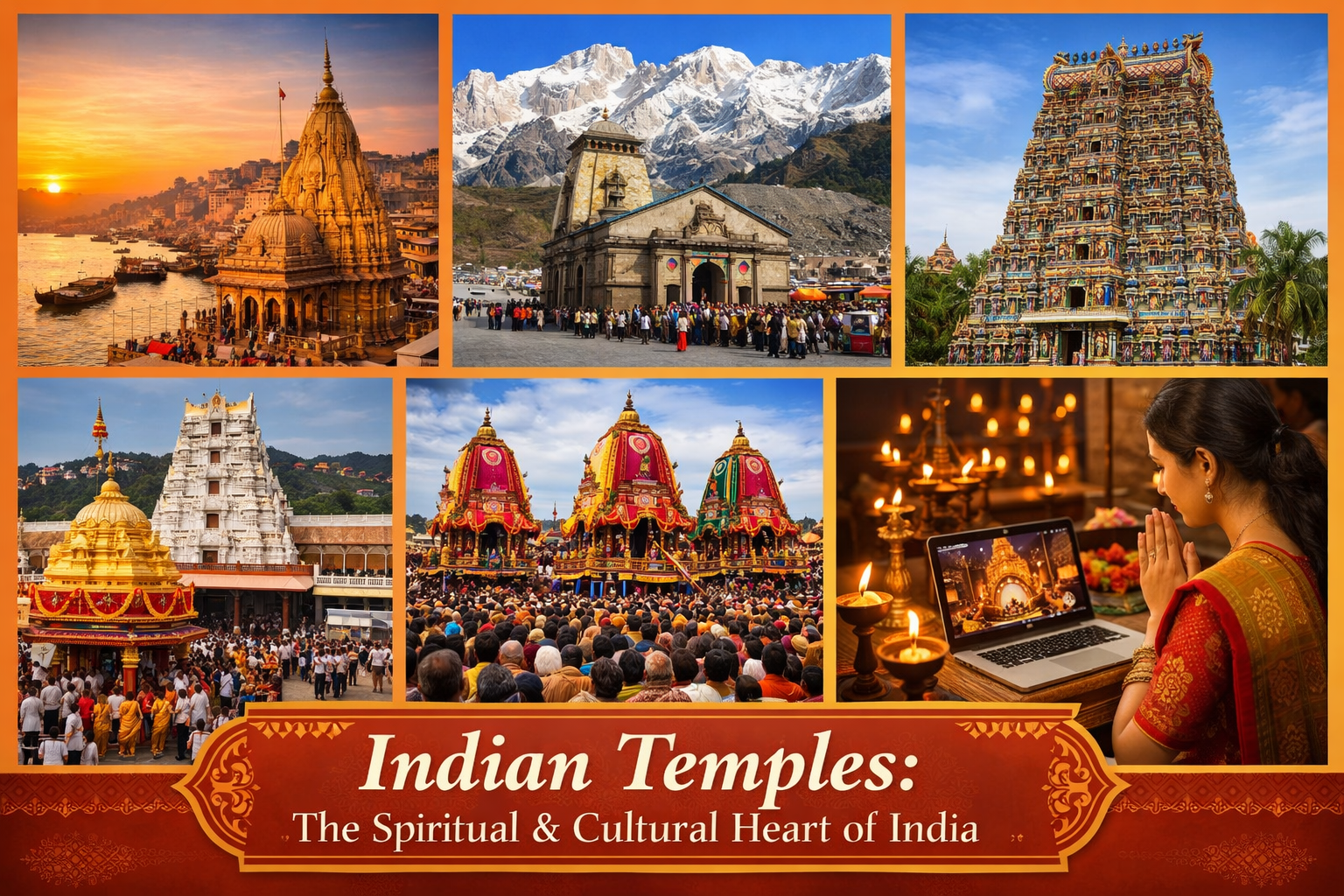
India is a land of deep spirituality, ancient traditions, and rich cultural heritage. At the center of this heritage stand Indian temples, which are not just places of worship but also symbols of art, architecture, history, and faith. From the snowy Himalayas to the southern coastline, temples reflect the spiritual diversity and unity of India.
The Importance of Temples in Indian Culture
Indian temples have played a vital role in shaping society for thousands of years. They serve as:
- Centers of spiritual learning and devotion
- Hubs for community gatherings and festivals
- Repositories of ancient art, sculpture, and architecture
- Symbols of Indian philosophy and values
For millions of devotees, temples offer peace, hope, and a connection with the divine.
Famous Temples of India
1. Kashi Vishwanath Temple, Varanasi
Dedicated to Lord Shiva, Kashi Vishwanath is one of the holiest temples in Hinduism. Located on the banks of the Ganga, it represents liberation and spiritual awakening.
2. Tirupati Balaji Temple, Andhra Pradesh
One of the richest and most visited temples in the world, Tirupati Balaji attracts millions of devotees every year who come to seek blessings from Lord Venkateswara.
3. Kedarnath Temple, Uttarakhand
Nestled in the Himalayas, Kedarnath is one of the Char Dham pilgrimage sites. Its location and spiritual significance make it one of the most revered temples in India.
4. Meenakshi Temple, Madurai
Famous for its stunning Dravidian architecture, the Meenakshi Temple is known for its colorful towers and detailed carvings.
5. Jagannath Temple, Puri
Known for the grand Rath Yatra festival, this temple is a major pilgrimage destination and holds deep religious importance.
Architectural Beauty of Indian Temples
Indian temples are architectural masterpieces. Different regions showcase different styles:
- Nagara style in North India
- Dravidian style in South India
- Vesara style in Central India
Each temple is designed using ancient principles like Vastu Shastra, symbolizing harmony between humans, nature, and the universe.
Festivals and Rituals
Temples come alive during festivals such as:
- Diwali
- Navratri
- Maha Shivratri
- Rath Yatra
These festivals bring people together and preserve traditions passed down through generations.
Spiritual Tourism and Economic Impact
Indian temples attract millions of domestic and international tourists. Temple tourism supports:
- Local employment
- Small businesses
- Handicrafts and traditional art
Spiritual tourism has become an important part of India’s economy.
Temples in Modern India
Even in modern times, temples remain relevant. Many temples now use:
- Online darshan
- Digital donations
- Live-streamed rituals
This blend of tradition and technology helps temples connect with devotees worldwide.
Conclusion
Indian temples are not just religious structures; they are living symbols of India’s soul. They represent devotion, artistic brilliance, cultural unity, and spiritual wisdom. Visiting a temple is not only a religious experience but also a journey into India’s ancient civilization and timeless values.
Valuble informestion
Wonderful